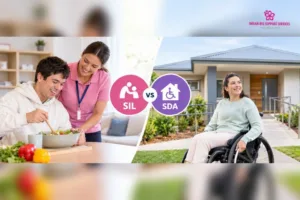
SIL and SDA both sit under the NDIS “home and living” umbrella, and they often appear in the same plan. Yet they pay for completely different things, and mixing them up can lead to the wrong application and months of delay. This guide explains SIL vs SDA in plain language, so you know what each covers, who qualifies, and how they work together.
Quick answer: SDA is the home; SIL is the help inside it. Through SDA, the NDIS pays for purpose-built homes suited to participants with complex disability needs. Supported Independent Living funds the support workers who assist with daily tasks, often 24/7. You may use either support alone, or combine both.
What Is Supported Independent Living (SIL)?
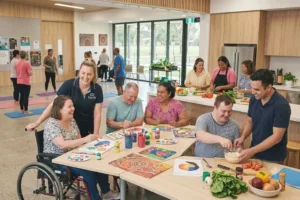
Under SIL, the NDIS pays for round-the-clock help at home, so a trained support worker is always on hand to assist. Most people share this support with housemates, though one-on-one funding is possible when someone’s needs truly call for it.
The goal is to help you live as independently as possible while building your skills, whether that means learning to prepare a simple meal, managing a weekly routine, or getting out into the community with more confidence.
What’s Included in SIL Funding (and What Isn’t)?
SIL funding can cover:
- Help getting ready, from bathing to choosing clothes and personal hygiene
- Help with meals, from planning and shopping to cooking and eating
- Household tasks like cleaning and laundry
- Prompts and support with medication and health routines
- Overnight support, either as a sleepover shift or active overnight help
- Building everyday living skills and independence
SIL does not cover:
- Rent
- Groceries
- Utilities
- Phone bills
- Other day-to-day living costs
Who qualifies for SIL?
According to the NDIA, SIL may suit you if you need a support worker to:
- Stay close by during the day, at night, or overnight hours
- Actively help you with daily activities for at least 8 of those hours
- Give some level of help or supervision for the remaining hours
What Is Specialist Disability Accommodation (SDA)?
SDA refers to purpose-built or specially designed housing for people with extreme functional impairment or very high support needs. These properties may include houses, apartments, villas, duplexes, or townhouses. A home counts as SDA once a registered provider builds it to the NDIA’s specifications and the Agency formally approves the dwelling.
What are the 4 SDA design categories?
1. Improved Liveability
For people with sensory, intellectual or cognitive disability, with clear sightlines and easy-to-read layouts.
2. Fully Accessible
For people with significant physical disability, with step-free access, wider doorways, and accessible bathrooms and kitchens.
3. Robust
For people with complex behaviours of concern, built with very durable finishes and safe retreat spaces.
4. High Physical Support
Suits people who rely on others for most physical tasks. These homes can include overhead hoists for transfers, power that stays on during outages, smart-home controls, and systems for calling help quickly.
Who is eligible for SDA?
To receive SDA funding, you need to:
- Have extreme functional impairment or very high support needs
- Meet the SDA needs requirement, which means your disability-related needs cannot reasonably be met in mainstream housing, even with modifications or assistive technology
- Meet the general NDIS funding criteria, including that the support is reasonable and necessary
SIL vs SDA: A Side-by-Side Comparison
| SIL | SDA | |
| What it is | Support from paid workers | A specially designed home |
| What it funds | Support workers who assist with everyday routines, usually around the clock | The home’s specialist features, paid to the SDA provider |
| NDIS budget | Core supports | Capital supports |
| Who it suits | People needing help or supervision day and night | People with extreme functional impairment or very high support needs |
| Where it is used | Any home, including SDA | Only an NDIA-enrolled SDA home |
| What you still pay | Rent, board, groceries and bills | A capped rent contribution, food and bills |
Can You Have SIL Without SDA?
Yes, and it is the more common arrangement. Most people with SIL live in ordinary homes, such as private rentals, family-owned homes or shared houses. SIL is based on the level of daily help you require, not your housing type.
This is especially relevant in regional Queensland. NDIA data shows SDA supply has grown fastest in capital cities, so many people start with SIL in a standard rental while they explore their options.
Can You Get SDA Without SIL?
Yes. SDA funding pays for the home only, so you still need support with daily living. SIL is the usual pairing, but is not the only one. Depending on your needs, SDA residents may use:
- Personal care and other core supports
- Individualised Living Options (ILO)
- Informal support from family and friends
- Onsite shared support (OSS), a newer option for people who live alone in SDA apartments
How SIL and SDA NDIS Work Alone or Together: Three Real-Life Examples
SIL only: A young man with an intellectual disability rents a regular house with two housemates. They share 24/7 SIL support, with no special building features needed.
SDA only: A woman with a spinal cord injury lives alone in a High Physical Support apartment, with scheduled personal care and on-site shared support for unplanned needs.
Both: A man with complex behaviours of concern lives in a Robust SDA villa, with a 24/7 SIL roster trained in his behaviour support plan.
As these show, the SIL vs SDA question is not about which is better. It is about which combination fits the person.
How Do You Apply for SIL or SDA Funding?
Both supports go through the NDIA’s home and living process, and the steps look fairly similar:
- Include a goal about where and how you live. For example, “I want to move out of my family home” or “I want to live somewhere safer for my needs.”
- Ask your support coordinator or my NDIS contact. They can explain your options and help you lodge a Home and Living Supports Request.
- Gather strong evidence. Functional assessments from an occupational therapist. For SDA, a housing assessment. Behaviour support plans, medical reports and carer statements can all strengthen your case.
- Get a SIL quote or roster of care. A provider sets out how support will be delivered across a typical week, including how it is shared with any housemates.
- Wait for the NDIA’s decision. If SDA is approved, your decision will note a recommended design category and building type to guide your search.
- Find your home and provider. Search vacancies on the NDIA’s SDA Finder, sign a written service agreement, and record your SDA provider as a “my provider” in your plan.
Finding the Right Home and Living Support in Toowoomba
Understanding the difference between SIL and SDA NDIS is the first step. The next is finding a team that listens and explains your options honestly.
Dream Big Support Services is a registered NDIS provider in East Toowoomba. Our Supported Independent Living services include individual and shared living, high-intensity support and 24/7 on-call help. Our team can also talk you through SDA options and how they fit with your other supports.
Whether you need SIL, SDA guidance, or any other disability support, contact our friendly team or call (07) 4595 1132 today.