For many people living with disabilities, making friends and feeling connected to the community can be just as important as receiving practical support. That’s where NDIS group activities can make a real difference.
These structured programs create safe and supportive environments where participants can meet new people, practise social skills, gain confidence, and enjoy shared experiences. Over time, these interactions often grow into genuine friendships while helping participants become more independent and active within their communities.
If you or a loved one is looking to expand their social circle or build independent social capabilities, this guide is for you.
What Are NDIS Group Activities?
NDIS group activities are structured programs where participants come together to take part in shared experiences with the support of trained support workers. While the activities may be creative, recreational, educational, or community-based, the goal is always the same: to help participants develop social skills, build confidence, and enjoy meaningful connections with others.
Depending on a participant’s NDIS plan and goals, group-based supports may be funded under Core Supports (Assistance with Social, Economic and Community Participation) or Capacity Building Supports (Increased Social and Community Participation).
Activities may be held at a provider’s centre (centre-based) or within the local community (community-based), including parks, cafés, libraries, sporting facilities, museums, and community events.
Why Social Connections Matter
Humans naturally seek connection as it helps people feel included, supported, and confident. For people living with disabilities, however, building and maintaining these connections isn’t always easy.
A range of barriers can make social participation more challenging, including:
- Limited opportunities to meet new people
- Communication challenges
- Anxiety in unfamiliar environments
- Physical or accessibility barriers
- Past experiences of social exclusion
- Limited access to transport or community activities
Without regular opportunities to interact with others, these challenges can lead to isolation, lower self-esteem, and reduced confidence.
Building strong social networks is about much more than making friends. It creates opportunities to learn from others, develop confidence, improve communication skills, and become an active participant in the community.
How Group Activities Help Develop Social Skills
Social skills improve with regular practice. Unlike one-on-one support, group settings provide natural opportunities for participants to practise skills in real situations.
Here are some of the ways group programs encourage social skills.
Learning Through Real Conversations
Whether participants are chatting during lunch, discussing a craft project, or working together on a community outing, each interaction builds confidence in expressing thoughts, asking questions, and engaging with others.
Communication improves with practice, and over time, these everyday conversations feel far more comfortable.
Developing Confidence Around Others
Meeting new people can feel overwhelming. Supportive facilitators help participants gradually become comfortable interacting with unfamiliar people, joining discussions, and participating in group decisions.
Small successes often lead to greater confidence both inside and outside the program.
Building Emotional Awareness
Group settings naturally expose participants to different personalities, opinions, and perspectives.
Participants learn to:
- Recognise emotions
- Understand social cues
- Show empathy
- Respect personal boundaries
- Manage disagreements calmly
These are valuable life skills that support healthy relationships.
Improving Teamwork
Many activities involve shared goals. Whether preparing a meal together, completing a creative project, or participating in sports, participants learn how to:
- Cooperate
- Take turns
- Encourage others
- Share responsibilities
- Celebrate collective achievements
These experiences strengthen both social and practical skills.
How Friendships Develop through Group Activities
Friendships are built through regular interaction, shared experiences, and a sense of belonging.
While a single activity may introduce participants to new people, attending regular group activities allows relationships to grow naturally. Over time, participants can form connections with others who share similar interests, experiences, and goals, creating meaningful friendships within a supportive environment.
When participants attend consistent sessions, they begin to:
- Recognise familiar faces
- Develop trust with other group members
- Share common interests and experiences
- Support and encourage each other
- Create a sense of belonging
Small moments, such as looking forward to seeing a particular person, sharing a joke, or helping another participant, often become the foundations of meaningful friendships.
Types of NDIS Group Activities That Encourage Social Connections
The best group activities are those that match a participant’s interests and abilities. When people enjoy what they are doing, communication and relationships often develop more naturally.
Some common examples include:
Creative Activities
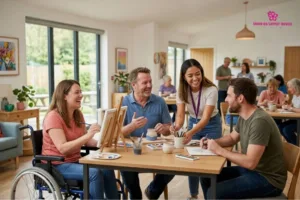
Art, music, craft, and other creative sessions provide relaxed opportunities for participants to interact while focusing on a shared project.
These activities can encourage self-expression, teamwork, and conversation without pressure on participants to communicate constantly.
Cooking and Life Skills Programs
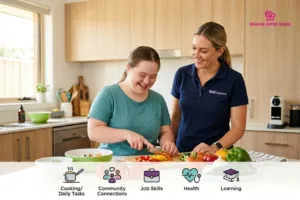
Cooking classes and practical skills sessions encourage participants to work together while learning valuable everyday skills.
Planning meals, preparing food, and completing tasks as a group naturally support communication and cooperation.
Community Participation Activities
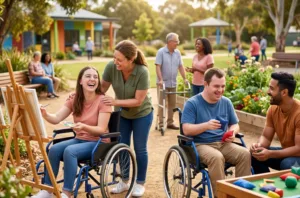
Community outings to local attractions, shopping centres, cafés, and events allow participants to practise social skills in real-world settings.
These experiences can help individuals become more comfortable engaging with the wider community.
Sports and Fitness Activities
Adaptive sports, walking groups, exercise sessions, and recreational games encourage teamwork and cooperation.
Participants can develop confidence while working towards shared goals and celebrating achievements together.
Peer Social Groups
Conversation-based groups provide a space where participants can share experiences, discuss interests, and connect with people who understand similar challenges.
These groups can reduce feelings of isolation and create opportunities for genuine support networks.
The Benefits of NDIS Group Activities Beyond Social Connections
Although social connections are the major outcome, participants frequently experience many additional benefits.
These include:
- Improved confidence
- Better communication
- Greater independence
- Reduced social anxiety
- Increased community participation
- Enhanced problem-solving skills
- Improved emotional wellbeing
- Stronger sense of belonging
- Increased motivation to achieve personal goals
- Better overall quality of life
These improvements often support progress across multiple NDIS goals.
Who Can Benefit from NDIS Group Activities?
Group-based supports are suitable for many participants, including people who:
- Want to make new friends
- Feel isolated or lonely
- Experience social anxiety
- Want to improve communication skills
- Are transitioning into greater independence
- Wish to feel more connected to their local community
- Enjoy learning alongside others
- Prefer structured social opportunities
Programs can often be adapted to suit different ages, communication styles, mobility needs, and support requirements.
Signs That Group Activities Are Making a Difference
Social progress can happen gradually, and small changes often show that a participant is gaining confidence.
Positive signs may include:
- Talking about activities or other group members at home
- Looking forward to attending sessions
- Becoming more willing to try new experiences
- Greeting familiar people outside the group
- Starting conversations more often
- Showing greater confidence in community settings
These improvements demonstrate that group activities are helping participants develop skills that extend beyond the session itself.
Choosing the Right NDIS Group Activity
Finding the right group is important because every participant has different interests, support needs, and comfort levels.
Before choosing a program, consider:
- Are the activities aligned with the participant’s interests and goals?
- Is the group size comfortable and suitable?
- Are support workers experienced and understanding?
- Does the program encourage genuine interaction rather than just attendance?
- Are participants given opportunities to provide feedback?
- Is the environment welcoming and inclusive?
A quality provider focuses on creating meaningful experiences where participants feel respected, supported, and encouraged to participate.
Dream Big. Connect Bigger
At Dream Big Support Services, our Queensland-based team designs NDIS group activities around real interests and real goals. We create a welcoming space where participants can naturally grow their confidence, learn practical skills, and form genuine friendships.
Get in touch with our friendly team today to explore group options that match your goals and start building friendships that last long after the session ends.